
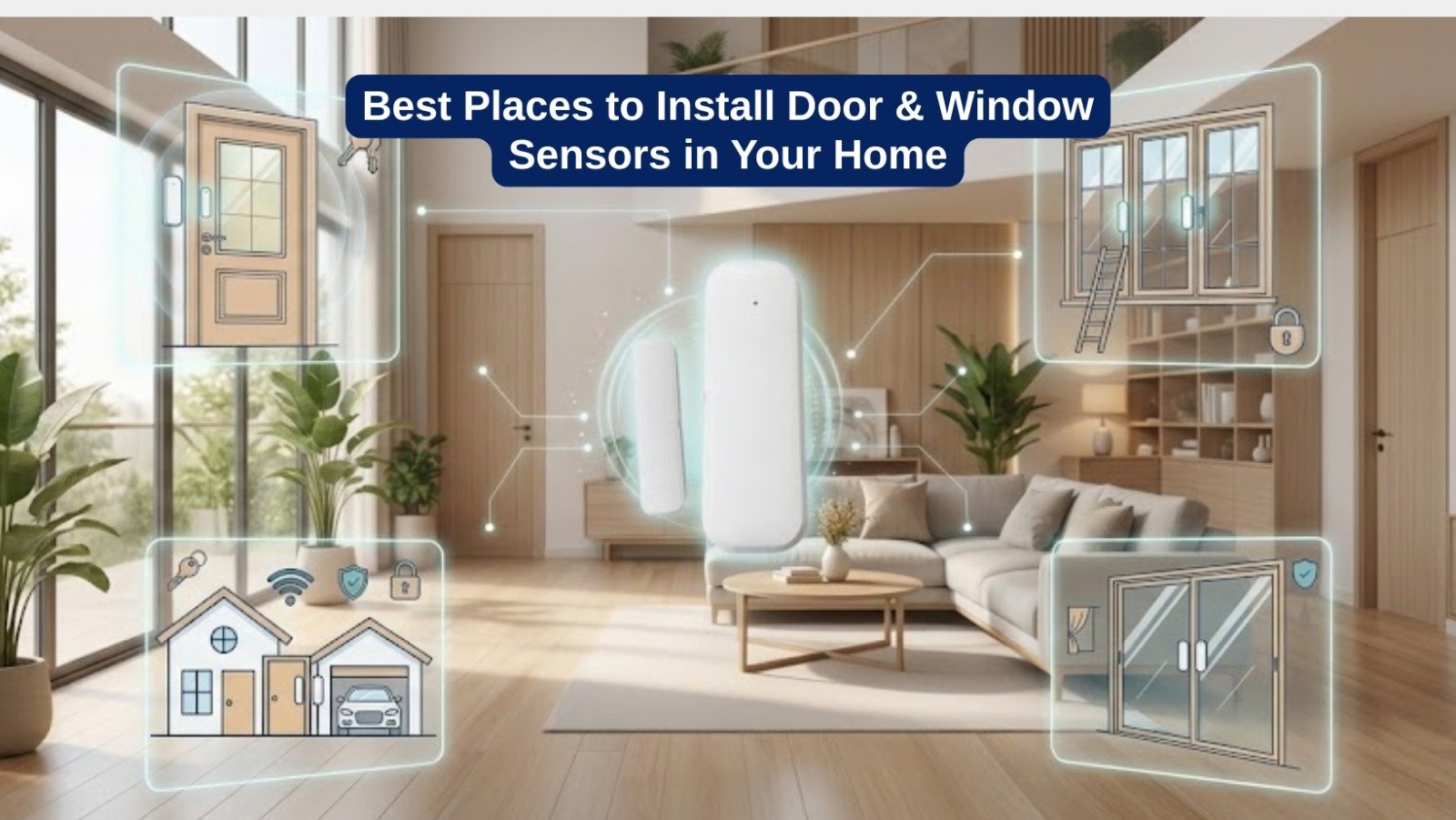
When people upgrade home security, the conversation almost always jumps straight to outdoor CCTV and heavier gates. Both matter. But the real perimeter of your house is its doors and windows — the actual points a burglar has to get through. Most opportunistic break-ins don’t involve anything clever; they involve prying open a ground-floor window or forcing a back door that nobody was watching.
Best Places to Install Door & Window Sensors turns those weak points into something that actually tells you when they’re being tested. It’s a small magnetic contact device that detects the moment an opening is breached, then pings your phone over Wi-Fi or Zigbee. But owning the sensors is only half of it. Where you put them decides whether you get a real early-warning network or a drawer of expensive gadgets that miss the one entry point that mattered.
Here’s where to place them, room by room, and how to mount each one properly.
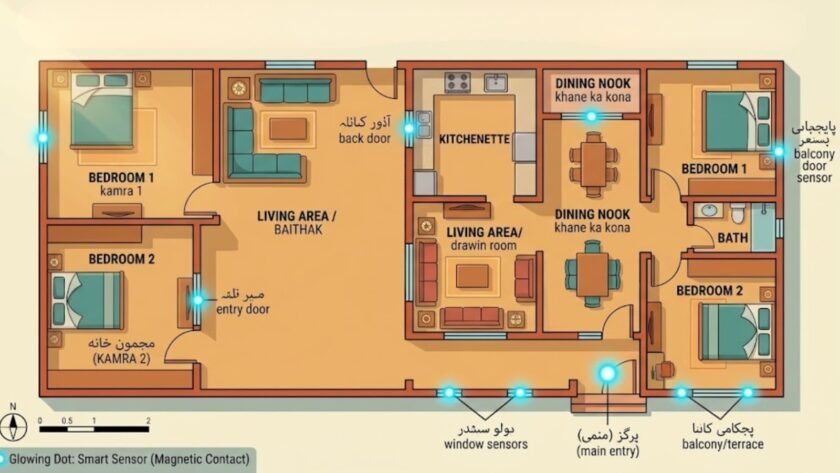
1. The Front Door
It’s the most obvious entry point, and also the one that gets used legitimately all day, which makes a sensor here useful in two ways. It logs exactly who comes and goes, and it can trigger automations — switching on hallway lights the moment the door opens after dark, for example.
Mounting tips:
- Put the sensor body on the door frame and the smaller magnet on the moving door, near the top corner opposite the hinges. That keeps both pieces out of children’s reach and away from accidental bumps from grocery bags or furniture.
- Keep the gap between sensor and magnet under the manufacturer’s limit — usually around 10mm — when the door is fully shut.
2. Back Doors and Kitchen Exits
If you only had budget for one extra sensor beyond the front door, this is where it should go. Back doors, kitchen exits, and courtyard doors sit out of sight from the street, behind boundary walls, side alleys, or garden plantings — exactly the privacy someone needs to work on a lock without being seen. In many Pakistani home layouts, with side passages and back service yards, that exposure is built into the design.
A sensor here means any forced or covert entry triggers a siren or phone alert immediately instead of going unnoticed.
Mounting tips:
- If the door takes direct monsoon rain or constant outdoor humidity, choose a weather-resistant model or mount the sensor on the interior-facing side of the frame.
- For sliding kitchen doors, run the sensor horizontally along the track where the moving glass panel meets the fixed frame.
3. Ground-Floor Windows Facing Streets or Alleys
Windows are weaker than solid doors, and the ground-floor ones facing a backstreet, side alley, or an unwatched garden wall are the easiest targets. An unlatched window can be eased open in seconds. A sensor on it gives you the alert before anyone has stepped inside — those few seconds are exactly when you can react or call for help.
Mounting tips:
- On sliding windows, put the sensor on the fixed frame and the magnet on the sliding sash. For casement windows, place the sensor on the opening edge rather than the hinge side, so the magnet separates as far as possible the moment the window moves.
- Modern sensors are slim enough to blend into white aluminum or wooden frames without spoiling the look of the room.
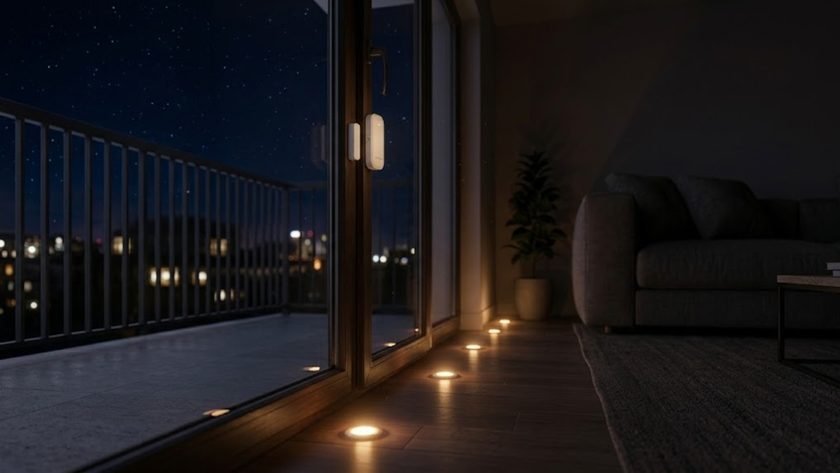
4. Balcony and Terrace Doors on Upper Floors
A lot of people assume upper-floor rooms are safe. They’re less safe than that if there’s an accessible balcony, an external staircase, a drainpipe, or a flat neighboring roof nearby — all of which make a master bedroom reachable. And balcony doors are the ones most often left ajar on a pleasant evening for ventilation, then forgotten.
A sensor here covers you even when you forget to latch the door before bed.
5. Service Verandas and Utility Rooms
Washing areas, service verandas, and external utility rooms often have secondary doors or louvered windows left unlocked for airflow. Because they’re set apart from the main living space, they make a convenient way in — somewhere to shelter from view while working on the interior door that leads into the house.
A sensor here acts as your outermost warning line.
Mounting tip:
- These spaces collect dust and moisture. Wipe the sensor and magnet contact points occasionally so signal and magnetic pairing stay reliable.
Placement at a Glance
| Location | Risk Level | Recommended Sensor Type | Key Automation Benefit |
|---|---|---|---|
| Front Door | High (heavy traffic) | Surface-mount magnetic contact | Turns on hallway lights on arrival |
| Back / Kitchen Door | Critical (hidden from view) | Heavy-duty wireless door sensor | Instant mobile push alerts |
| Ground-Floor Windows | High (easy access) | Slim-profile window sensor | Early warning before entry |
| Upper-Floor Balcony Doors | Moderate to high | Standard magnetic contact | Night-mode perimeter alerts |
| Service / Utility Rooms | Moderate | Weather-tolerant sensor | Detects back-access attempts |
Practical Tips Before You Stick Anything to a Wall
Test signal strength first. Hold the sensor in place without removing the adhesive backing and check the app to confirm it reliably registers open and closed states through walls and metal. A sensor that drops connection from its permanent spot is worse than none.
Account for window grills. Almost every exterior window in Pakistan has iron safety grills. Check that an openable grill panel, if you swing it open for cleaning, won’t crush or knock the sensor body.
Link sensors to the rest of your system. Programming your AC to shut off if a balcony door stays open for more than three minutes, using a Smart Plug or Smart Switch, turns a security device into an electricity saver too.
Building a Complete Setup Around Your Sensors
Door and window sensors work best as one layer. eGalaxy’s Smart Security Sensor & Buzzer Alarm is a ready-made starting point with a built-in sounder. Pair it with a Smart Doorbell at the main gate and an Indoor Security Camera inside, and you’ll know who’s at the door, whether it was opened, and what’s happening in the room. eGalaxy’s Motion Sensors and Zigbee Smart Devices ranges extend the same setup to interior hallways and larger systems built on Zigbee, all managed from one Tuya Smart app.
If you’re new to how these devices work in the first place, our guide on what a smart door and window sensor is covers the reed switch and pairing process, and 10 ways door and window sensors improve home security covers what they do once they’re running.